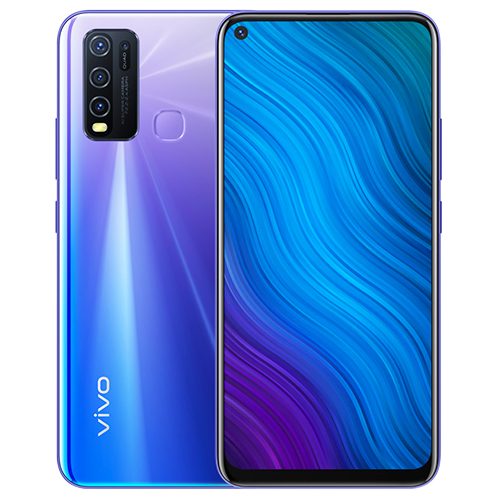
Vivo Y50
78
%
Spec
Score



Expected
Coming soon

Pros
- 6.53" 1080x2400 pixels 120Hz display with high brightness
- 5000mAh huge battery with fast charging
- Modern connectivity options and premium build
- 13MP 1080p primary camera setup
- Android 10.0; Funtouch 10.0 with smooth UI performance
Cons
- Qualcomm offers mid-range performance
- Secondary camera has limited functionality
- No 3.5mm headphone jack
- No microSD card slot
- USB Type-C 2.0 instead of USB 3.x
Specifications
General
|
Brand
|
Vivo
|
|
Model
|
Y50
|
|
Device
|
Smartphones
|
|
Added
|
April 6, 2020
|
|
Updated
|
May 26, 2024
|
Prices
|
Official
|
8GB 128GB ₦250,000
|
Launch
|
Announced
The official date or month when the manufacturer publicly announced and introduced the product to the global market.
|
2020, April 6
|
|
Status
Current market availability status of the device (e.g. Available, Released, Coming Soon, or Discontinued).
|
Available. Released 2020, April 12
|
Network
|
EDGE
EDGE (Enhanced Data GSM Environment) is a wireless network technology generally considered the next step in the 2G network offers data transfer rates up to four times faster than ordinary GSM networks, Generally, EDGE is used for the purpose of wireless data transfer, such as sharing pictures and videos or browsing the Internet via a mobile phone connection.
|
Yes
|
|
GPRS
GPRS (General Packet Radio Service) is a packet-oriented mobile data standard on 2G cellular networks facilitating basic internet browsing and MMS transfer.
|
Yes
|
|
Speed
Maximum theoretical cellular download and upload data speeds supported by the device's modem (e.g. HSPA 42.2/5.76 Mbps, LTE-A, 5G SA/NSA).
|
HSPA 42.2/5.76 Mbps, LTE-A
|
|
Technology
Network technology refers to the type of cellular connectivity supported by the mobile device, such as GSM, HSPA, LTE (4G), or 5G Sub-6/mmWave.
|
GSM / HSPA / LTE
|
|
2G bands
2G (Second Generation) digital cellular network frequencies (typically GSM 850 / 900 / 1800 / 1900 MHz) used for basic voice calls, SMS, and low-speed data.
|
GSM 850 / 900 / 1800 / 1900 - SIM 1 & SIM 2
|
|
3G bands
3G (Third Generation) cellular frequencies (such as UMTS/HSDPA/WCDMA) providing faster data transfer speeds, video calling, and improved internet browsing over 2G.
|
HSDPA 850 / 900 / 2100
|
|
4G bands
4G LTE (Long-Term Evolution) frequency bands that provide high-speed mobile broadband internet access, HD voice calling (VoLTE), and low latency.
|
LTE band 1(2100), 3(1800), 5(850), 7(2600), 8(900), 38(2600), 40(2300), 41(2500)
|
Body
|
Dimensions
Physical dimensions (Height × Width × Thickness in millimeters and inches) defining the outer size and form factor of the phone or tablet.
|
162 x 76.5 x 9.1 mm (6.38 x 3.01 x 0.36 in)
|
|
Weight
Total physical weight of the device in grams (g) and ounces (oz), including the internal battery.
|
197 g (6.95 oz)
|
|
Build
Exterior materials used in constructing the device (such as glass front, glass or ceramic back, aluminum or plastic frame, eco-leather finish).
|
Glass front, plastic back, plastic frame
|
|
SIM
Type and number of SIM card slots supported (e.g., Nano-SIM, Dual SIM with dual standby, eSIM support, hybrid slots).
|
Dual SIM (Nano-SIM, dual stand-by)
|
Display
|
Features
Special screen features like high refresh rate (90Hz, 120Hz, 144Hz), HDR10+, Dolby Vision, peak brightness in nits, PWM dimming, or always-on display.
|
LED flash, HDR, panorama
|
|
Type
Display panel technology (such as AMOLED, Super AMOLED, OLED, IPS LCD, LTPO, or TFT) determining color vibrancy, contrast ratios, and viewing angles.
|
Non-removable Li-Po
|
|
Size
Diagonal measurement of the display screen measured in inches (″) or centimeters (cm) and screen-to-body percentage ratio.
|
6.53 inches, 102.9 cm2 (~83.1% screen-to-body ratio)
|
|
Resolution
Total number of pixels displayed horizontally and vertically (e.g., FHD+ 1080 × 2400 pixels), aspect ratio, and pixel density in pixels per inch (ppi).
|
1080 x 2400 pixels, 20:9 ratio (~403 ppi density)
|
Platform
|
OS
Operating System and custom user interface software installed on the device (such as Android 14 with HyperOS, One UI, OxygenOS, iOS, or HarmonyOS).
|
Android 10.0; Funtouch 10.0
|
|
Chipset
System on a Chip (SoC) combining the central processor, graphics processor, neural engine, and modem (e.g., Qualcomm Snapdragon, MediaTek Dimensity, Apple Bionic, Google Tensor).
|
Qualcomm SM6125 Snapdragon 665 (11 nm)
|
|
CPU
Central Processing Unit architecture, core count (e.g., Octa-core), and clock speeds in GHz handling all primary computing tasks.
|
Octa-core (4x2.0 GHz Kryo 260 Gold & 4x1.8 GHz Kryo 260 Silver)
|
|
GPU
Graphics Processing Unit (such as Adreno, Mali, or Immortalis) responsible for 3D graphics rendering, video decoding, and smooth gaming.
|
Adreno 610
|
Memory
|
Card slot
Support for external memory expansion (such as microSDXC) through a dedicated memory slot or shared hybrid SIM tray.
|
microSDXC (dedicated slot)
|
|
Internal
Built-in onboard flash storage capacity (ROM) and operating memory (RAM) configurations (e.g. 128GB 8GB RAM, 256GB 12GB RAM) using UFS or eMMC flash standards.
|
128 eMMC 5.1
|
Main camera
|
Quad
Quad camera array featuring four specialized lenses for versatile focal lengths and photography styles.
|
13 MP, f/2.2, (wide), PDAF8 MP, f/2.2, 13mm (ultrawide), 1/4.0", 1.12µm2 MP, f/2.4, (macro)2 MP, f/2.4, (depth)
|
|
Video
Maximum video recording resolutions and frame rates supported (such as 8K@24/30fps, 4K@30/60fps, 1080p@30/60/120/240fps, HDR, gyro-EIS, OIS).
|
1080p@30fps
|
Selfie camera
|
Single
Single camera sensor configuration with megapixel count, aperture, and sensor details.
|
16 MP, f/2.0, (wide)
|
Sound
|
Alert types
|
Vibration, MP3, WAV ringtones
|
|
Loudspeaker
Audio output speaker system (e.g. stereo dual speakers, bottom-firing speaker, Dolby Atmos tuning, Hi-Res audio certification).
|
Yes
|
|
3.5mm jack
Presence of standard 3.5mm stereo headphone / audio jack for connecting wired headphones or external microphones without an adapter.
|
Yes
|
Connectivity
|
GPS
Satellite positioning and geolocation navigation systems supported (such as GPS, GLONASS, GALILEO, BDS, QZSS, NavIC) with dual-band precision.
|
Yes, with A-GPS, GLONASS, GALILEO
|
|
WLAN
Wi-Fi networking standards supported (e.g., Wi-Fi 802.11 a/b/g/n/ac/6/6e/7), dual-band, Wi-Fi Direct, and mobile hotspot functionality.
|
Wi-Fi 802.11 a/b/g/n, dual-band, Wi-Fi Direct, hotspot
|
|
Bluetooth
Short-range wireless technology version (e.g., Bluetooth 5.3, 5.4) with supported audio codecs (A2DP, LE, aptX HD, LDAC, LHDC).
|
5.0, A2DP, LE
|
|
NFC
Near Field Communication technology used for wireless contactless payments (Google Pay, Apple Pay), transit cards, and instant pairing.
|
No
|
|
FM radio
Built-in FM radio receiver for listening to broadcast radio stations over the air (often requiring wired earphones as an antenna).
|
No
|
|
USB
Universal Serial Bus connector type and specification (e.g. USB Type-C 2.0 / 3.2 Gen 1), supporting OTG (On-The-Go) data transfer and DisplayPort.
|
2.0, Type-C 1.0 reversible connector, USB On-The-Go
|
Features
|
Browser
|
HTML5
|
|
Java
|
No
|
|
Messaging
|
SMS(threaded view), MMS, Email, IM
|
|
Sensors
Built-in hardware sensors (such as fingerprint scanner under-display/side-mounted, accelerometer, gyro, proximity sensor, compass, barometer, color spectrum).
|
Fingerprint (rear-mounted), accelerometer, proximity, compass
|
Battery
|
Capacity
Battery energy storage capacity measured in milliampere-hours (mAh) indicating total power reserve.
|
5000 mAh
|
More
|
Other Features
|
Fast charging 15W
|
|
Made by
|
China
|
|
Color
Official color finishes and aesthetic variants released by the manufacturer for this device.
|
Starry Black, Iris Blue, Iris Blue, Pearl White
|
General Specs
|
RAM
Random Access Memory capacity used by the operating system and running apps for multitasking, caching, and fast app switching.
|
8 GB
|
Disclaimer
We do not guarantee that the information of this page is 100% accurate and up to date. Read more about our full disclaimer
Vivo Y50 Price in Pakistan September 2026
| Model | Vivo Y50 |
| Price | Coming soon |
| Display | 6.53″ 1080×2400 pixels |
| RAM | 8 GB |
| ROM | 128 eMMC 5.1 |
| Released | 2020, April 12 |